RCA Process and Continual Improvement
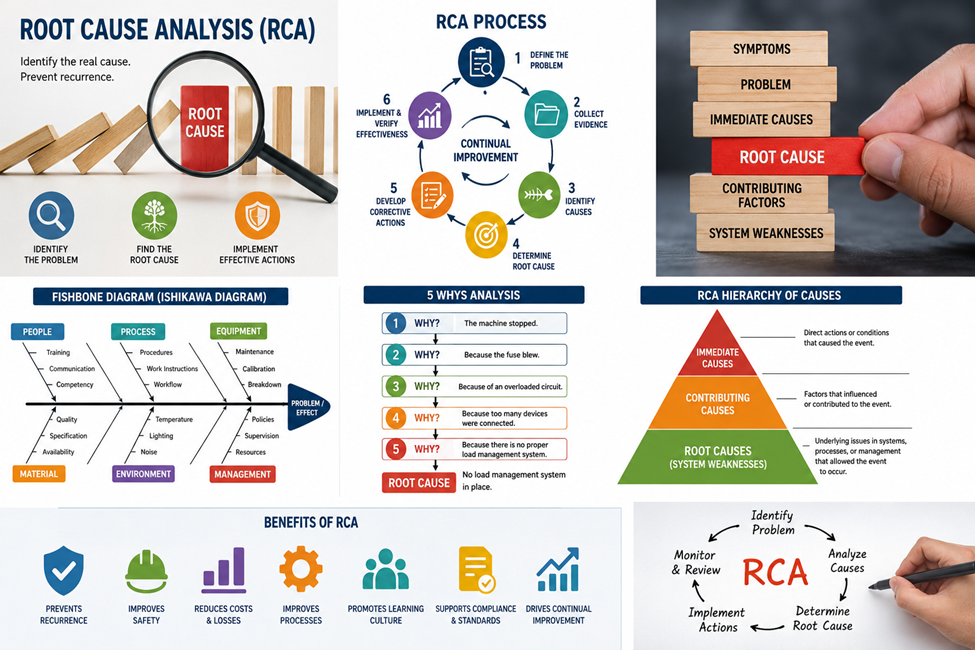
Root Cause Analysis (RCA) is a structured process used to identify the real causes of incidents, failures, nonconformities, or repeated problems. Its main purpose is to find out what happened, why it happened, and how recurrence can be prevented.
The RCA process starts by clearly defining the problem, followed by collecting evidence through inspections, interviews, records, photographs, procedures, and maintenance or training documents. The event sequence is then reviewed to understand how the issue developed.
After gathering facts, the team identifies immediate causes, contributing factors, and root causes. Common RCA tools include 5 Whys, Fishbone Diagram, Fault Tree Analysis, Barrier Analysis, SCAT, and Tripod Beta. Corrective and preventive actions are then developed, assigned to responsible persons, given target dates, and tracked until completion.
RCA supports continual improvement by strengthening procedures, training, supervision, communication, maintenance, and risk controls. Its real value comes from implementing corrective actions and verifying their effectiveness.
In short, RCA is not a blame exercise. It is a learning process that helps organizations prevent recurrence, reduce losses, improve safety culture, and strengthen management system performance.